|
| Marina Sunrise |
It has been a fun week of being a tourist, relaxing, cleaning, exercising, working on the boat and visiting friends and making new friends. Tomorrow, with rain in the forecast, we will once again cast off the lines and head east via the Okeechobee waterway.
Serenity is well clean. Even the isinglass sparkles after fresh water rinse. POC used the special cleaner and microfiber towels to clean and polish.
We have made several trips to the publix grocery only 0.8 mile away. Time at the library, a very nice library with an excellent periodical section.
We scored a ride to super walmart and conducted a major re-supply. Ready for a long cruise with anchorages.
I walked a mile+ each way through questionable/sketchy area to get to the Yanmar dealer to purchase spare oil and fuel filters. They did not deliver; I was too cheap to uber. It was a sunny nice day. Easy.
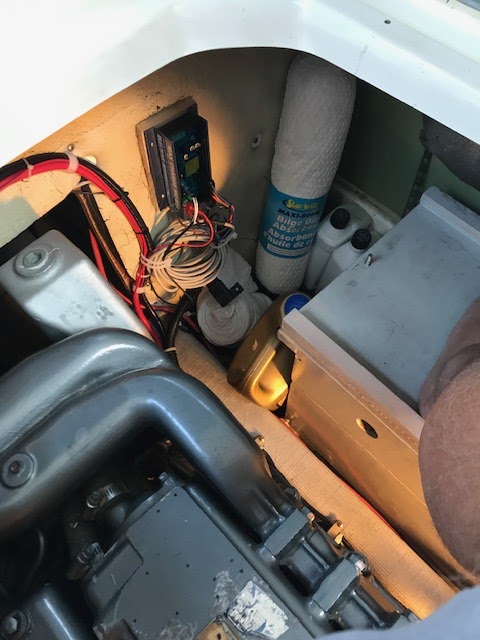
It took me two days to remove/replace the old 55 Amp alternator which is working fine, but by design does not adequately recharge the house bank of batteries except when doing a couple of days of 5-7 hours of cruising. Then rewire and install a new aftermarket 80 amp alternator and an external solid state regulator. I did not know much about alternators except they recharge the battery before I began to research how to better recharge my house bank. Similar to automotive electrical systems, boat DC systems are similar. The battery has the energy to start the engine and operate certain electrical systems. The alternator provides regulated voltage/amperage to replenish the energy consumed by the battery. Generally, factory installed alternators self-regulate with internal regulators and preserve life by reducing output/load so they don't overheat and prematurely wear out. It seems most boat builders do the same, marine factory alternators are sized to recharge start batteries and poorly recharge house batteries because they internally regulate output to keep from over heating. On Serenity, after a night at anchorage, powering LED lights, charging cell phones, lap top, iPad, cellular internet and running the fresh water pump, we often consume 30-50 amp hours of energy. The next day at engine start up I will see 30-40 amp output from the alternator, but within 10-15 minutes a decrease to 12-15 Amps, then decrease to cruising steady state of around 9 amps. So to replenish 50 amp hours consumed at 9 amp hours requires almost 6 hours of engine operation at some RPM above idle. The new alternator with the solid state external regulator theoretically can provide up to 80 amps. I have detuned it to preserve belt life since I am using a single drive belt and not a serpentine belt. The new alternator is wired with marine grade tinned coper 4 AWG + - wires now going to the house bank. The original alternator had the positive wire going to the starter. The regulator has a temp sensor from the alternator, a batter temp sensor from the house bank batteries and volt sensing from the house bank. I programmed the regulator for flooded lead acid batteries which Serenity has 4 x 6vdc golf cart batteries and I programed the belt monitor to a load of 75% max alternator output. Pre-flight check completed, re-inspected all wiring and connections for tightness and location. Verified all other items moved to facilitate maintenance were put back where they belong and checked all tools accounted for. Reconnected the batteries. Op check good--no smoke! Preformed a series of electrical checks with my digital meter per the installation/operation manual. Turned start key to run and finished a few additional voltage checks with the meter which all checked good. Time for the main event. Started up the Yanmar--it started which was good after rewiring. Observed my installed battery health monitor system and was getting 20 Amps at idle. Excellent, did not expect too high as batteries have been on shore power charger for several days, but I did draw down the batteries during the installation and operational checks. Voltage was per the manual for flooded lead acid batteries--excellent. Shut down engine. So far so good. Will operationally put to the test underway tomorrow and will monitor alternator output underway. Real test will come after a night at anchor. I intend to intentionally draw down the house bank more than normal to see if I get expect alternator output and quicker re-charge. More later.
 |
| New regulator wired in |
 |
| Wiring new regulator |
 |
| 4 awg routing |
 |
| External regulator |